Sandblasted Signs for Rhode Island Historic Districts and Boutique Properties
A sandblasted sign reads as crafted, not printed. The dimensional carving, the tactile depth of the letterforms, the way the finish catches light differently across the raised and recessed surfaces, the unmistakable signal that someone took time with this rather than running it through a printer. For Newport's harbor district, Providence's College Hill, Wickford Village, Pawtuxet, and the boutique commercial properties across Rhode Island that need to look the part, sandblasted signs are the right answer.
Signway RI fabricates and installs custom sandblasted signs for Rhode Island historic-district storefronts, boutique hotels and inns, restaurants and pubs, wineries and breweries, real estate developments, country clubs, religious and cultural institutions, and any property where the sign needs to feel hand-crafted.
We deliver and install across Providence, Cranston, Warwick, East Providence, North Kingstown, Johnston, and Newport.
Why Sandblasted Signs Work
Most signs are produced. Sandblasted signs are made. The difference matters in three places.
- Historic Districts
Newport, Bristol, downtown Providence, Wickford, and Pawtuxet enforce strict historic-district rules that often require traditional materials and dimensional craft. A sandblasted cedar or HDU sign clears review where a printed plastic sign does not.
- Boutique and Heritage Brands
Boutique hotels, fine restaurants, wineries, country clubs, and luxury retailers communicate authenticity through material and craft. A sandblasted sign tells customers the property cares about the details.
- Long-Term Investment
Properly finished sandblasted signs run twenty to thirty years on HDU foam and longer on stone or premium hardwood. Compared to printed signs that fade in three to five years, the long lifespan compounds value over time.
Sandblasted Sign Types
HDU Foam Sandblasted Signs
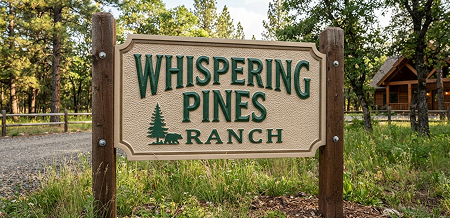
High-density urethane foam, sandblasted to create dimensional letters and graphics, then primed and painted with weather-resistant finishes. The most common modern spec. Mimics the look of carved wood at a longer outdoor lifespan, with no rot, splitting, or warping.
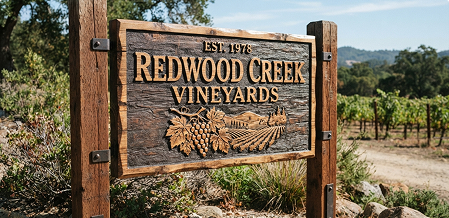
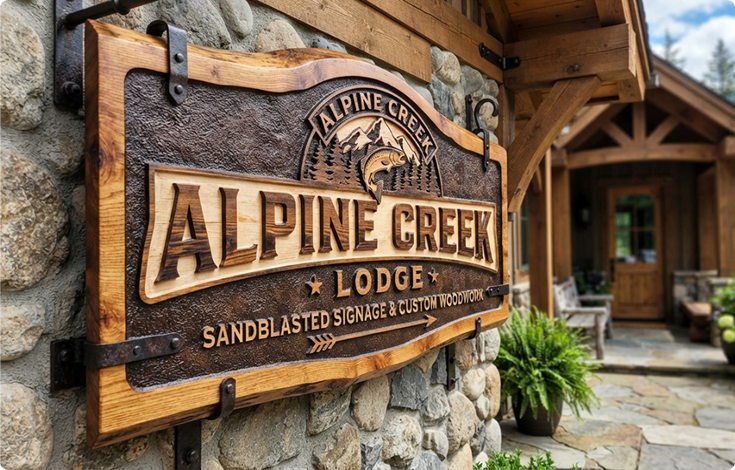
Cedar and Redwood Sandblasted Signs
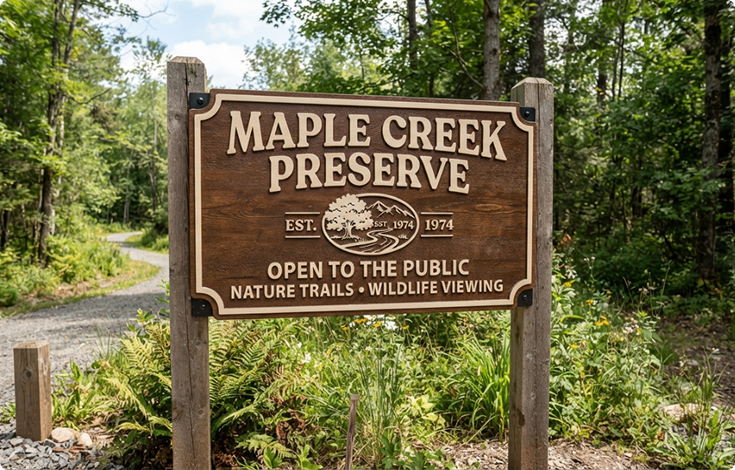
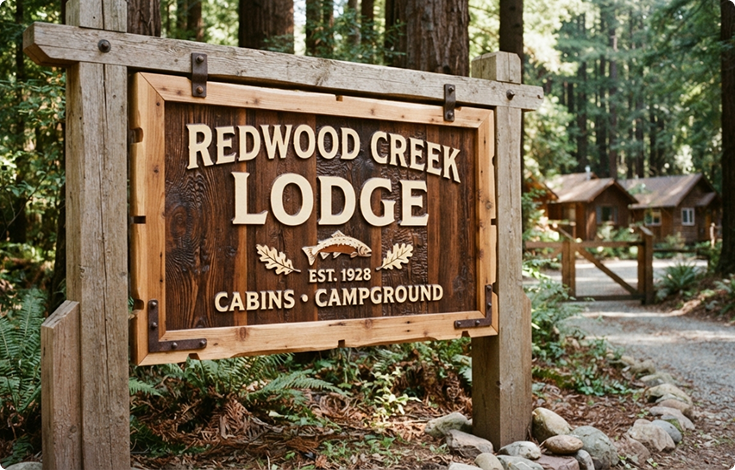
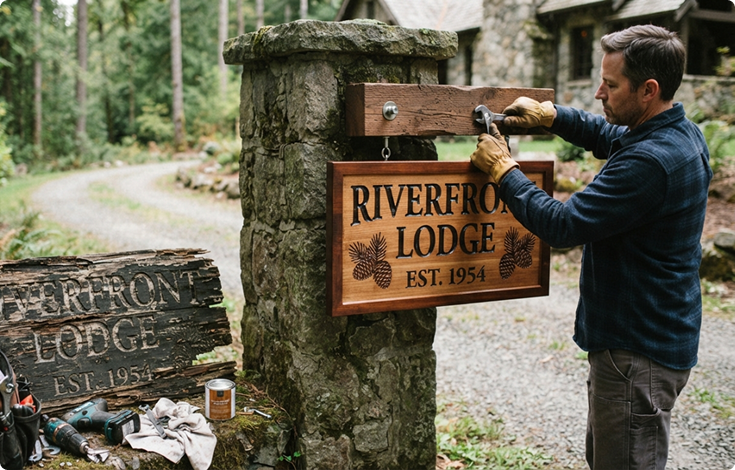
Traditional sandblasted hardwood signs in cedar, redwood, or mahogany. Sandblasting removes the soft grain and leaves the harder grain raised, creating a textured wood-grain background with smooth lettering on top. The classic boutique and heritage spec.
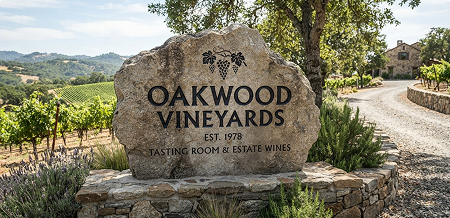
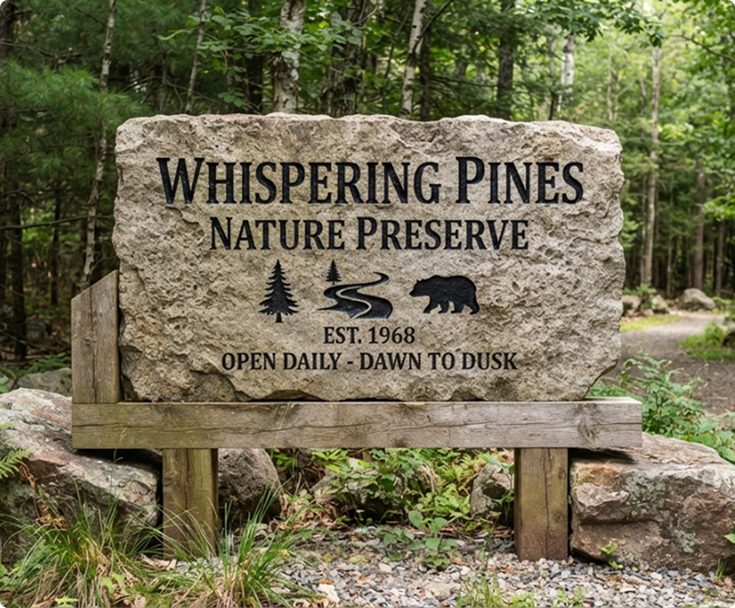
Sandblasted Stone Signs
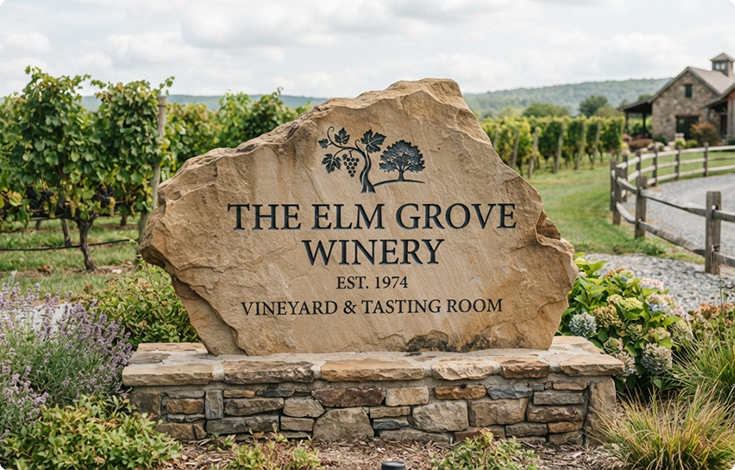
Granite, marble, limestone, or other natural stone with sandblasted lettering and graphics. Permanent. Used for memorial signs, real estate development entrances, country club identification, religious and institutional buildings, and any property requiring a hundred-year sign.
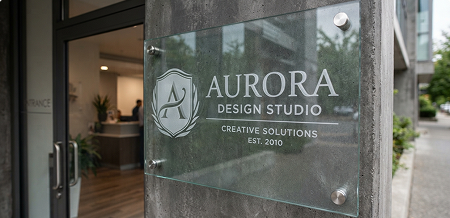
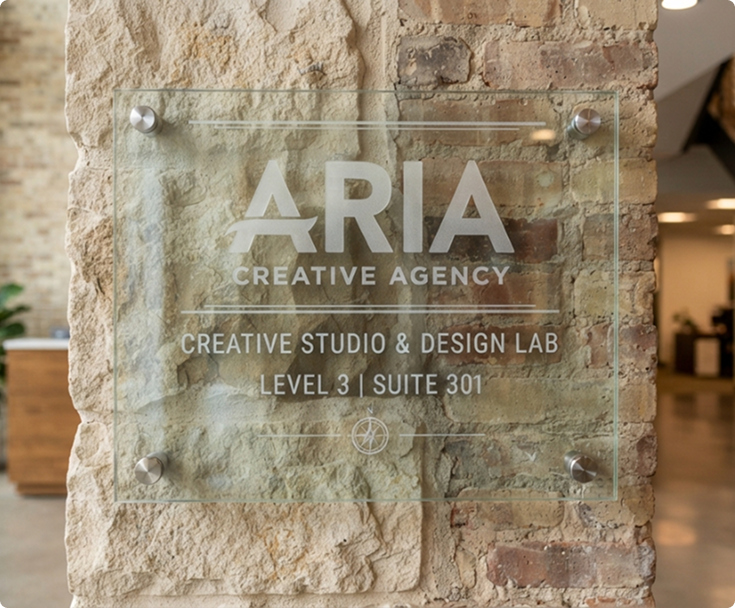
Sandblasted and Etched Glass
Glass partitions, doors, and feature panels with sandblasted lettering and graphics. Permanent etching that becomes part of the architecture. Used in legal, financial, hospitality lobbies, and architectural feature work.
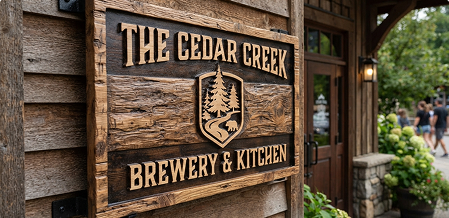
Custom Dimensional Logo Sandblasting
Brand-specific custom logos and identity pieces sandblasted to dimensional carved profiles. Combined with painted finishes, gold leaf, or metallic accents for premium identity work.
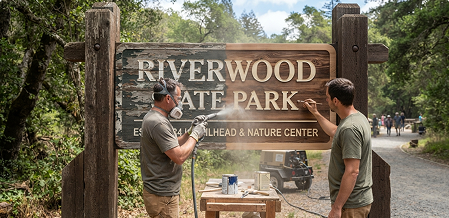
Replacement and Restoration Sandblasted Signs
Period-accurate replacement signs for historic-district restoration projects, heritage properties, and traditional commercial properties refreshing aging sandblasted signage.
Common Applications
- Historic-District Storefronts
Newport's Thames Street, Federal Hill in Providence, Wickford Village, Pawtuxet, and any commercial corridor where district rules govern sign material and dimensional craft.
- Boutique Hotels and Inns
Hospitality properties where the sign at the entrance communicates the experience inside.
- Restaurants and Pubs
Fine dining, neighborhood pubs, and food businesses with brand identities tied to craft, heritage, or regional character.
- Wineries, Breweries, and Distilleries
Beverage producers using sandblasted signs at tasting rooms, production facilities, and visitor entrances.
- Real Estate Developments
Entry signs at residential and commercial developments where the entrance sign sets the property's character.
- Country Clubs, Golf Courses, and Resorts
Hospitality and recreation properties with traditional brand identities.
- Religious and Cultural Institutions
Churches, synagogues, museums, and historic societies with traditional or heritage brand requirements.
- Estates and Private Properties
Custom address and entry signs for premium residential properties (selectively offered alongside our commercial work).
Materials and Finishes
- HDU Foam
High-density urethane foam in standard one-inch through three-inch thicknesses. Painted in custom colors, distressed for aged appearance, or finished with metallic accents. Twenty-to-thirty-year exterior lifespan.
- Cedar and Redwood
Traditional western red cedar and redwood for the classic sandblasted-wood look. Stained, sealed, or oiled finishes. Fifteen-to-twenty-year lifespan with maintenance.
- Mahogany and Premium Hardwood
Premium hardwood for high-end sandblasted signs requiring deeper grain texture and richer color.
- Granite, Marble, and Limestone
Natural stone for permanent installations. Lifespan is effectively unlimited with proper installation.
- Glass
Annealed or tempered glass with sandblasted etching for partition systems, doors, and architectural features.
- Finishing Options
Painted in custom brand-matched colors, distressed for aged or weathered appearance, gold leaf application, metallic powder, stained or oil-finished wood, and clear-coat sealants.
Sandblasted vs Routed
Sandblasted signs and CNC-routed signs both produce dimensional letterforms. The difference is in the look and the production method.
Routed signs are cut by a CNC router with a defined bit. The edges are sharp, the depth is consistent, and the production is fast. Routed signs work well for clean modern brand expressions and dimensional letters where uniformity matters.
Sandblasted signs are produced by blasting compressed-air abrasives against the substrate. The edges have natural texture, the depth varies subtly, and the production takes longer. Sandblasted signs work well for craft-oriented brand expressions and historic-district installations where the hand-made character is part of the design.
We produce both. We will tell you which is right for your specific project.
Industries That Run Sandblasted Sign Programs
Boutique hotels and hospitality. Historic-district storefronts and commercial corridors. Fine restaurants and pubs. Wineries, breweries, and distilleries. Real estate developers and property management. Country clubs, golf courses, and resorts. Religious and cultural institutions. Higher education and heritage campuses. Memorial, tribute, and commemorative installations.
What Affects Sandblasted Sign Pricing
Material drives the largest cost difference. HDU foam is the cost baseline. Cedar and redwood run mid-tier. Mahogany, granite, and premium materials run premium. Sign size, lettering complexity, finish detail (painted, stained, gold leaf), and mounting hardware add tiered cost.
Most Rhode Island commercial sandblasted sign projects move through design, fabrication, and installation in 4 to 8 weeks for HDU and wood, and longer for stone or premium-finish work.
Sandblasted Signs Across Rhode Island
We design, fabricate, and install sandblasted signs across our home market and every commercial corridor we serve.
For historic-district properties, boutique hotel groups, and property managers running heritage portfolios, we coordinate sandblasted sign programs with consistent material specs, finish standards, and district-compliant design.