
Sign Permitting and Compliance for Rhode Island Commercial Projects
Most commercial sign projects do not fail in the shop. They fail at the city desk, at the landlord's office, or in front of a planning board nobody warned the buyer about. SignWay RI was built around that reality. Before a single sign is fabricated, we ensure your concepts are designed to meet municipal codes, landlord guidelines, and local zoning requirements.
We handle every layer of permitting and compliance for Rhode Island commercial sign projects. Zoning. Sign ordinances. Landlord approvals. HOA sign-offs. ADA review. Electrical permits. Historic district submissions. You sign one approval package up front and we take it from there.
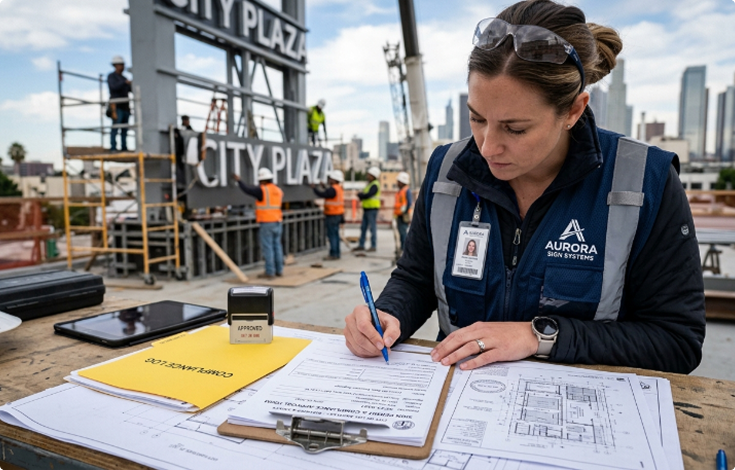

What Permit-Aware from the First Conversation Means
Most sign companies design first and worry about permits second. That is how projects end up redesigned twice, fabricated late, and installed under a temporary letter of approval that everybody pretends did not happen. Signway RI works in the reverse order.
When you bring us a project, the first conversation covers four things: what your city allows, what your landlord requires, what code your building falls under, and what historic or overlay district rules might apply. That conversation happens before we quote materials and before we lock the design.
The result is a scope that gets approved on the first submission. No three-week stall while the planner asks for a revised drawing. No fabrication delay while the landlord sends back a comment. No surprise on installation day because the electrical permit was missed.
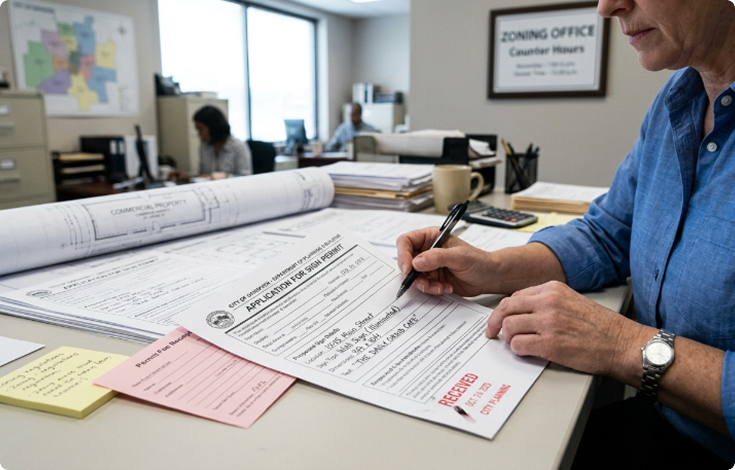
The Four Approvals Every Commercial Sign Project Needs
A commercial sign in Rhode Island typically needs to clear four separate approvals before installation. Most sign buyers only think about one of them. We track all four.

Municipal Sign Permit
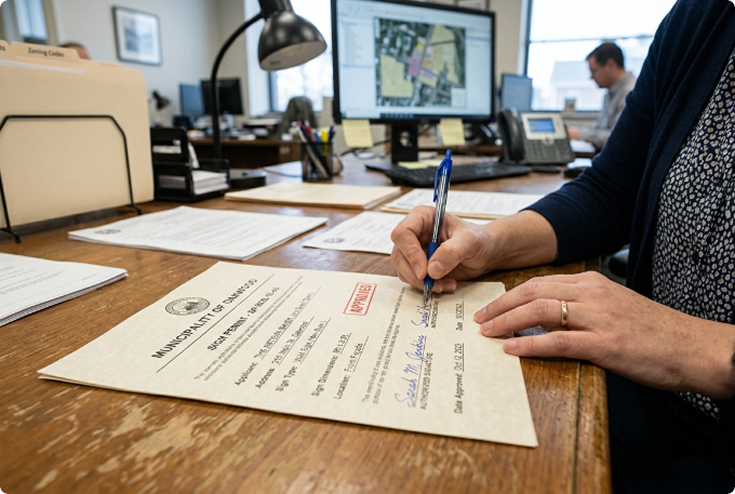
Every Rhode Island municipality requires a sign permit for commercial installations. The application reviews sign size, height, illumination, setback, placement, and material against the local sign ordinance. Submission requires a scaled drawing, a site plan, manufacturer specs, and sometimes a structural calculation. We prepare the package, file it, track it, and respond to comments on your behalf.

Landlord or Property Owner Approval
If you lease your space, your lease almost certainly contains a sign clause. The landlord typically wants to review the design, approve the location on the building, and confirm the install method. For multi-tenant properties, the landlord's existing sign criteria document governs what you can and cannot do. We read the lease clause, work to the criteria, and submit for landlord approval before fabrication.

HOA, Condo, or Property Association Sign-Off
Multi-tenant commercial parks, condo associations, and managed business districts often have their own sign review boards on top of the municipal permit. Their requirements are sometimes stricter than the city's. We catch this early and submit through the right channels.

Electrical and Building Permits
Illuminated signs require an electrical permit. Some jurisdictions also require a building permit for any sign mounted to a structural wall or ground-installed monument. We file these in parallel with the sign permit so the install schedule does not stall waiting for an inspector.
Why Rhode Island Businesses Choose Signway RI Over the Incumbents
Clearer Process, Faster Turnarounds
A signed proposal, not a six-week guessing game. We quote, we schedule, we deliver. None of the legacy-shop stall.
Commercial-First Focus
No yard signs. No trophy engraving. No side-of-desk retail orders. Commercial signage is the whole business.
Written Scopes, Documented Installs
Every project ends with a closeout package: permit records, as-built photos, warranty terms, maintenance notes. Your file is complete the day we leave.
Trusted Advisor, Not a Vendor
We tell you early when a design will not get approved, when a cheaper substrate will fail inside two years, or when a lease clause will kill the install. Better to hear it on call one than call four.

Rhode Island Municipal Sign Rules at a Glance
Every city in Rhode Island runs its own sign ordinance. We work all of them and we know the practical differences that show up at the planner's desk.
- Providence. The most layered jurisdiction in the state. Downtown Providence, the Jewelry District, College Hill, and the Federal Hill historic district each carry additional rules. Sign permits typically require board review for changes in size, illumination, or projection.
- Cranston. Generally permissive on commercial corridors but specific about height, setback, and total square footage on multi-tenant properties. Reservoir Avenue, Oaklawn, and Garden City each have practical norms beyond the written ordinance.
- Warwick. Roadside and pole sign rules are tighter than most buyers expect. Post Road and Bald Hill Road frontage signs almost always trigger a planning review because of pole-sign caps and right-of-way setbacks.
- East Providence. Rules are workable but specific about illumination and pylon sign height, particularly along Wampanoag Trail and the waterfront redevelopment area.
- North Kingstown. Quonset Business Park has its own master sign program on top of the municipal ordinance. Tenant identification signs need to clear both layers.
- Johnston. Growing commercial corridors mean some sign rules are still being interpreted in practice. We know the planner and we know how the current readings tend to land.
- Newport. The strictest jurisdiction in Rhode Island for sign work. Historic district rules govern color, material, mounting, illumination, and even font selection in protected zones. Plan for a longer review and tighter creative constraints.
Code Compliance Specialties
Beyond the municipal permit, several federal and state codes govern commercial sign work. We hold to all of them.
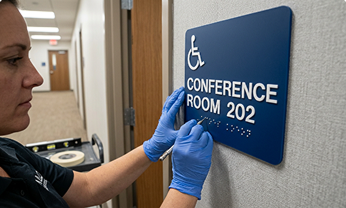
ADA Compliance
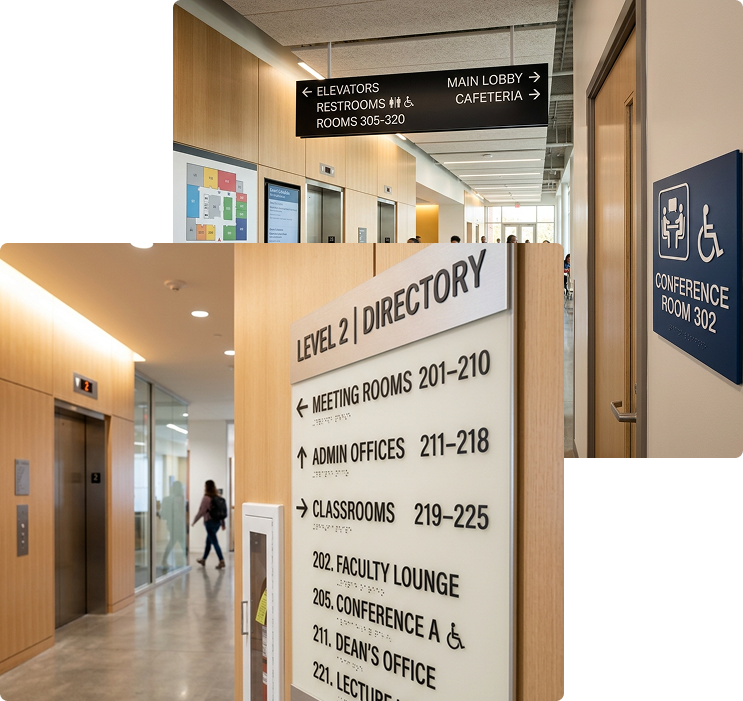
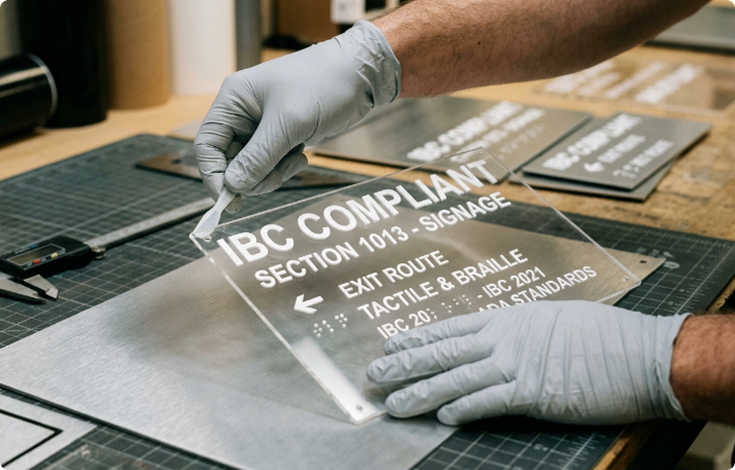
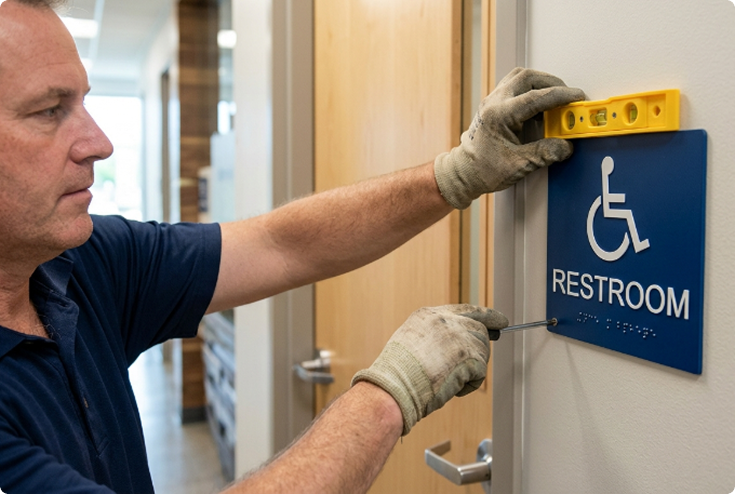
Interior identification signs, room IDs, restroom signs, exit signs, and any sign required for navigation must meet ADA standards for character height, contrast, mounting height, tactile copy, and Braille. Property managers, healthcare practices, multi-family buildings, and higher education campuses all face direct ADA exposure. We design to the standard and document the spec.

International Building Code (IBC)
Wall signs, projecting signs, and roof signs over a certain size are governed by IBC requirements for structural attachment, wind load, and clearance. Our drawings include the structural notes the building department needs.

National Electrical Code (NEC) and UL
Illuminated signs must use UL-listed components, code-compliant wiring, and proper grounding. We use UL-listed LED systems on every illuminated sign as standard practice and provide the documentation your inspector wants to see.

Historic District and Preservation Rules
Newport, downtown Providence, parts of Bristol, and several other Rhode Island districts enforce historic preservation rules that limit material choice, color, mounting hardware, and illumination. We have submitted in these districts before and we know what passes.
Multi-Tenant Properties and Master Sign Programs
If you operate a multi-tenant commercial property, your tenants are not just permitting a sign. They are working through your master sign program, your lease clauses, your existing building branding, and your landlord criteria document.
We work both sides. For property managers and developers, we draft and update master sign programs that hold up to municipal review and give tenants clear, fair guidelines. For tenants in those buildings, we read the criteria document, design it, and submit through the property manager's preferred channel.
For multi-location commercial accounts, we maintain a single project log across all sites and surface conflicts between local sign codes and your national brand standard before they hit fabrication.
Why Sign Projects Actually Get Rejected
After years of working Rhode Island municipal review, the pattern of rejection is consistent. Almost every rejected sign project trips on one of five issues.
- Oversized Square Footage.
Most ordinances cap total signage by frontage. A buyer asks for a sign that looks right visually, the city counts the area, and the sign comes back over. - Illumination Method.
Some districts allow internally illuminated signs but not exposed neon. Some allow halo-lit but not face-lit. Some prohibit illumination entirely on certain elevations. - Setback or Placement.
Pole signs in particular get rejected for distance from the right-of-way, distance from property lines, or proximity to driveways and intersections.
The Way
- Mounting Method.
Building departments care about how a sign attaches to a structure. A drawing without structural notes or fastener spec stalls in review. - Historic or Overlay District.
Buyers do not always know they are in one. The city does. We check this on day one.
We catch all five before submission.
How the Process Actually Runs

Address Review
You give us the address. We look up zoning, overlay districts, historic flags, and any visible easements before we even visit the site.

Site Walk and Documentation
We meet you at the property to confirm conditions, measure existing signage, photograph mounting locations, and identify constraints.

Design to the Approval Path
Concepts are drawn against the rules from the start. Scale, illumination, materials, and mounting are all chosen to clear review.

Landlord, HOA, and Master Sign Program Submissions
We run these in parallel with the city permit so nothing stalls in series.

Submission and Tracking
We file the application, track its status, and respond to planner comments within twenty-four hours.

Permit Package Preparation
We assemble the application, scaled drawings, site plan, structural notes, and electrical specs.

Final Approval and Release to Fabrication
Once everything is in writing, we release your project to the shop with a clean approval file.
Who This Service Matters Most For
- Property Managers and Multi-Family Developers. Tenant signs, building identity, monument signs, and wayfinding all run through your office. We give you a single point of contact who can keep the entire portfolio compliant.
- Multi-Location Retailers and Restaurants. Every Rhode Island municipality reads its sign ordinance differently. We translate your national brand standard into a sign that gets approved in each city you operate in.
- Industrial and Warehouse Operators. Quonset and other industrial parks have layered approval paths. We know them.
- Higher Education and Institutional Clients. Campus identification, wayfinding, ADA, and event signage all carry different code paths. We work all of them.
- Healthcare Practices. ADA exposure is sharpest in healthcare. We design and document to the standard.

Sign Permitting Across Rhode Island
We file, track, and clear sign permits across our home market and every commercial corridor we serve.
If your project sits outside this list, ask. We have worked in surrounding communities and we know which jurisdictions are practical to take on and which are not.